Trenching projects in Durham encounter heavy Carolina red clay, river rock, and dense hardwood roots that quickly stall manual trench shovels and small tillers. A walk-behind trencher handles residential spaces in…
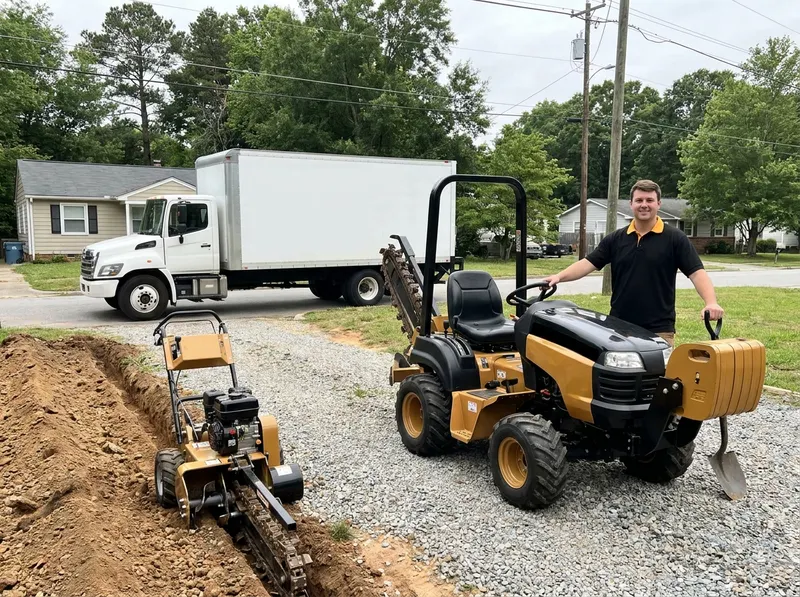
Trenching projects in Durham encounter heavy Carolina red clay, river rock, and dense hardwood roots that quickly stall manual trench shovels and small tillers. A walk-behind trencher handles residential spaces in neighborhoods like Trinity Park, Old West Durham, and Duke Park, navigating standard 36-inch yard gates to lay 1-inch irrigation tubing or low-voltage landscape lighting 18 to 24 inches down. When laying four-inch drainage lines, septic connections, or primary electrical conduits across acreage in Hope Valley, Southpoint, or Woodcroft, a 30-to-50 horsepower ride-on trencher delivers the weight and torque necessary to cut 36 to 48 inches deep without stalling the boom.
The decision involves a direct trade-off between physical maneuverability and cutting speed: compact walk-behind models preserve established turf and fit tight property setbacks near Burch Avenue, but they advance slower through dry, compacted earth; ride-on units trench hundreds of linear feet per hour and feature hydraulic backfill blades, yet demand wide-open clearance and heavier transit trailers. Operators working near historic districts like Brightleaf or Forest Hills must contact NC811 three business days prior to cutting, as utility mains frequently rest shallower than standard 24-inch depths in older infrastructure sectors. All machinery runs carbide-tipped rock and dirt teeth combinations to keep digging chains from binding when encountering underground obstructions near the Eno River basin.
Every job gets a firm, written price after a free on-site visit.
Tell us about your ride-on & walk-behind trencher rentals job in Durham and we'll send a clear, written quote, usually the same day.
 Lion Rock Dumpster Rental